
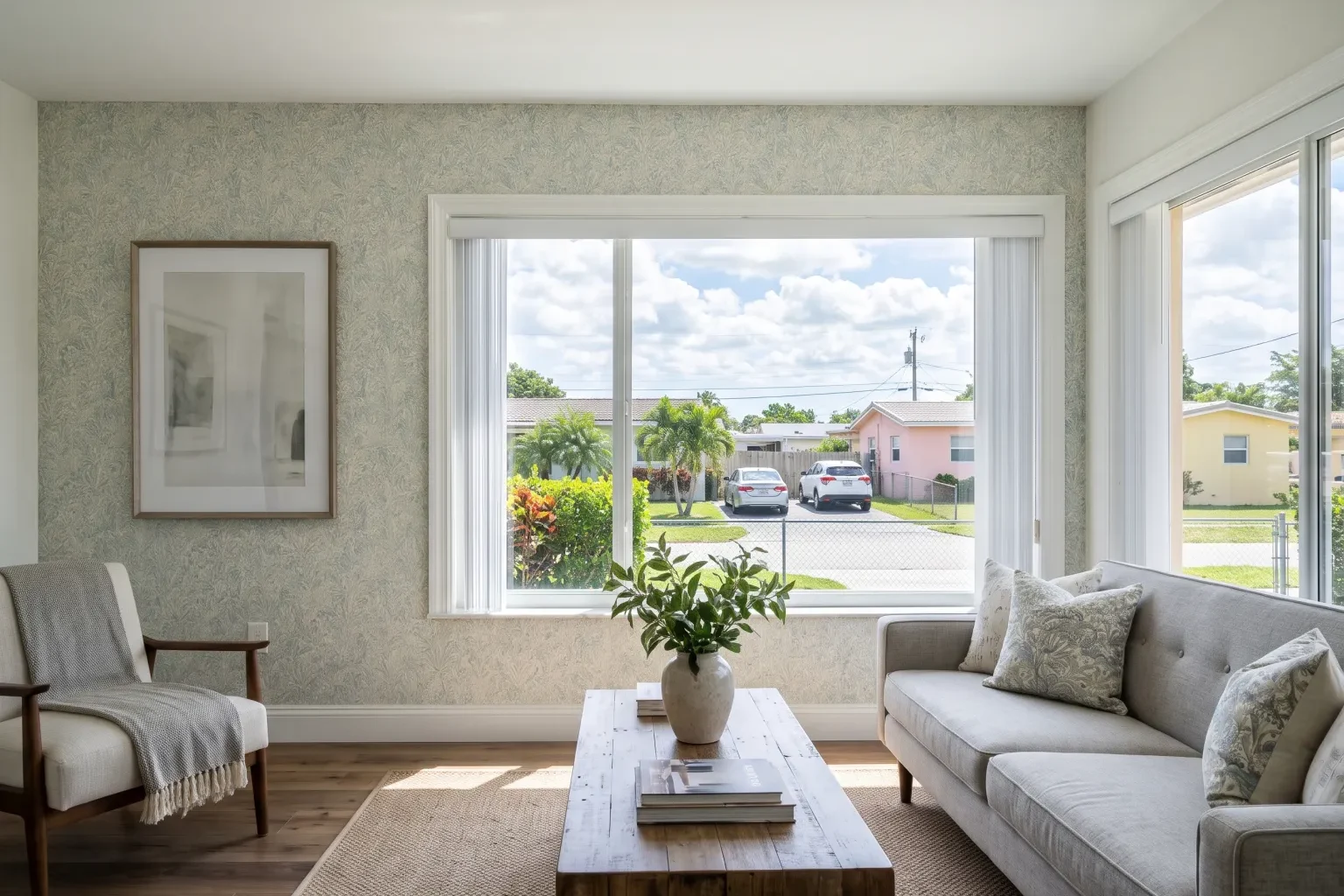
The short answer
Commercial wallcovering is a durable, usually vinyl-based material made for high-traffic spaces. We prepare and prime the substrate, plan seams and layout, double-cut or butt the wide strips, trim precisely at transitions and leave a surface that can be scrubbed for years.
Commercial wallcoverings are heavier, wider and tougher than residential papers, built to take scuffs from chairs, carts and constant cleaning. Homeowners use them more than you might expect: in busy hallways, mudrooms, home gyms, playrooms, rental units and home-based offices or studios that see clients. Small business owners in Miami Gardens, Medley, Hialeah and Doral also call us for waiting rooms and offices. This page explains when a commercial-grade product makes sense and how we install it.
When commercial-grade material is the better pick
Standard decorative papers are fine in a bedroom. In a room where kids drag toys along the wall, a dog brushes past every hour or a rental changes tenants every year, they wear out quickly. Type II vinyl wallcoverings and similar commercial products have a thicker face layer and a fabric backing that resists tearing and stands up to repeated wiping.
Good residential candidates include long hallways, stairwells, laundry and utility rooms, garage conversions, home offices where clients visit and rooms in short-term rentals. For small businesses, think reception areas, salons, clinics and retail fitting rooms. In South Florida, many commercial vinyls also resist moisture better than paper, which helps in spaces where doors open to the outside all day.
There are tradeoffs. These products are heavy, often come in wide rolls that need two people and specific adhesives, and some vinyls trap moisture if hung on an exterior block wall with no vapor considerations. We look at the wall construction and the room's air conditioning before recommending one.
Substrate preparation and primer
Heavy wallcoverings magnify both strength and flaws. A thick vinyl will hide minor texture, but it also puts more weight and tension on the wall, so loose paint or old paper underneath must come off first. We scrape and sand any failing coatings, cut out and patch damaged drywall, and fill gouges along corners where carts or furniture have hit the wall.
On concrete block walls with plaster or drywall over them, we pay attention to whether the wall faces outside. Exterior walls in a humid climate can carry moisture through the block, and a non-breathable vinyl can trap it, which leads to mildew behind the covering. In those cases we discuss breathable alternatives or the right primer and adhesive system. Interior partitions are more straightforward.
The final step before hanging is a primer formulated for commercial wallcoverings. It seals the surface, controls how fast the adhesive sets and makes future removal possible without destroying the drywall.
- Remove any existing covering and loose paint
- Patch impact damage and dents along traffic paths
- Assess moisture on exterior-facing block walls
- Prime with a product approved for heavy vinyl
Installation process for wide-roll and heavy vinyl
We begin with measuring the full run of the wall, including doors, windows and corners, and note the product's roll width, which for commercial material is often much wider than residential paper. From those numbers we plan seam locations so they avoid outside corners and land away from door and window edges where they would get the most wear.
Adhesive is rolled onto the back of the material or the wall, depending on the product, using the type the manufacturer specifies. Strips are hung to a plumb line and smoothed with a stiff brush or plastic smoother to eliminate air pockets, which are harder to see in thick material.
Pattern and texture matching follow the manufacturer's direction. Many commercial vinyls call for reverse hanging, where every other strip is flipped to keep color shading even across the wall. Patterned products are matched at eye level first.
Seams on many commercial products are double cut: adjacent strips overlap slightly, then both layers are sliced at once with a straightedge so the edges meet perfectly. The scrap is pulled away and the seam is rolled flat. Trimming at ceilings, baseboards and outlets is done with a fresh blade, and we often recommend corner guards on outside corners in high-traffic areas.
What affects the cost
Commercial installs vary widely. These are the main drivers we look at when scoping a job.
- Wall condition, including removal of existing covering and drywall repair
- Material type and weight, from lighter vinyls to heavy textured or acoustic products
- Pattern repeat and whether the product requires reverse hanging or careful shading control
- Room size, total wall length and ceiling height, including stairwells that need staging
- Access and scheduling, such as after-hours work in a business or a condo building's rules
Care and cleaning
One of the main reasons to choose commercial wallcovering is how easy it is to maintain. Most vinyl products can be washed with a soft brush or sponge and mild soap in warm water, then rinsed with clean water and wiped dry. Avoid abrasive pads and harsh solvents, which can dull the surface or remove the protective layer.
Address scuffs and marks soon after they happen. Check outside corners and seam lines in busy areas every so often, and reattach any lifted edge with seam adhesive before it catches and tears. If the covering is on an exterior wall, keep the AC running during the humid months and watch for any discoloration that might signal moisture from outside.