
The short answer
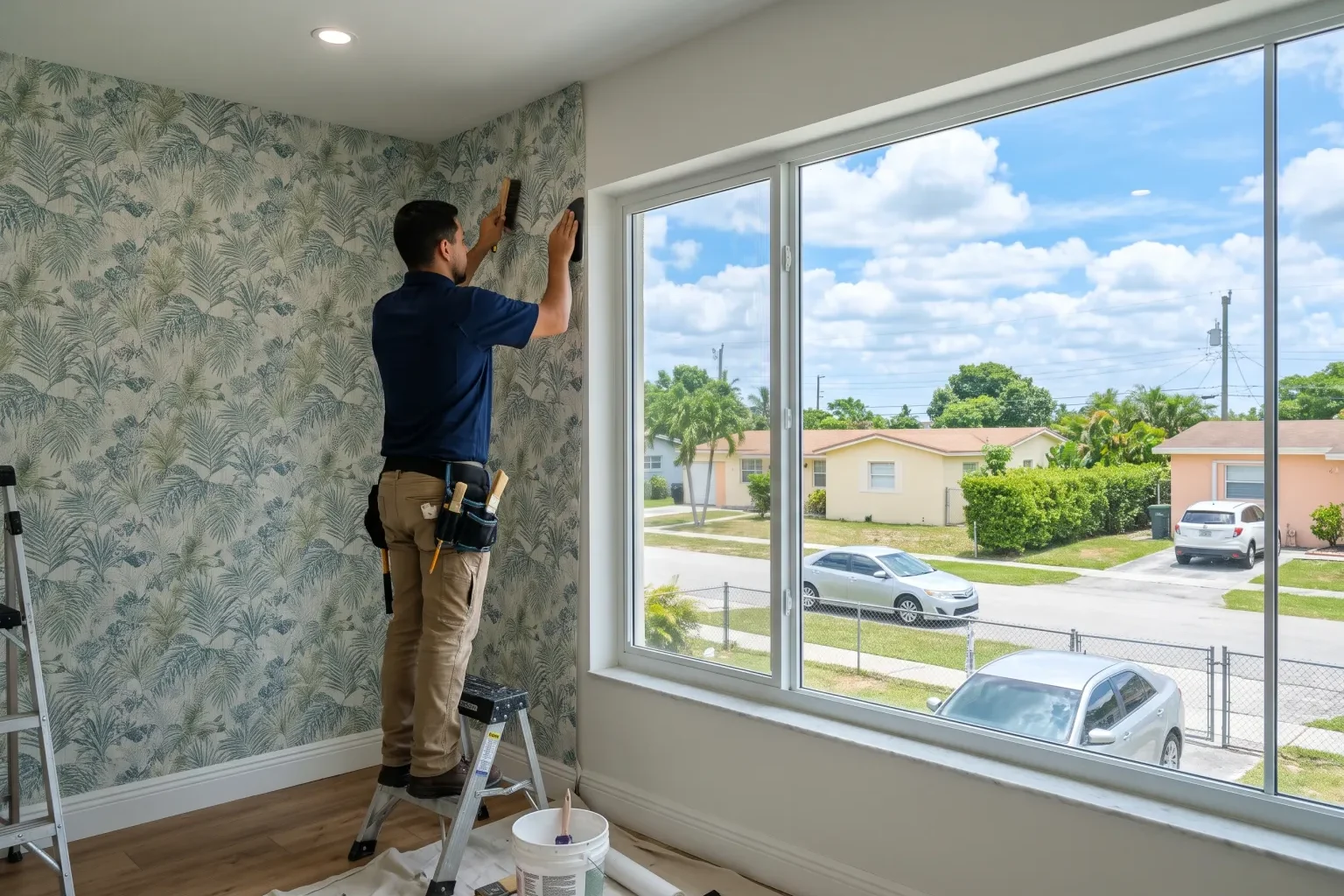
Wallpaper is a smart choice for rooms where you want pattern, color or texture that paint cannot give, from accent walls to whole bedrooms and powder rooms. We repair and prime the walls, plan seam placement and pattern layout before cutting, then hang, match and trim each strip so the design flows continuously around the room.
Wallpaper has come back into South Florida homes in a big way: botanical prints in dining rooms, small geometrics in powder rooms, soft textures in bedrooms, bold patterns on a single wall behind a television. The products are better than they were a generation ago, with non-woven backings that hang cleanly and come down without a fight. What has not changed is that a good result depends on patient, exact work. Reliable Wallpaper Installer hangs traditional, prepasted, non-woven and specialty papers in single-family homes, townhouses and condos throughout Miami Gardens and the neighboring parts of Miami-Dade and Broward. Read on for help deciding where wallpaper belongs, a look at how we get walls ready, our hanging method from first measurement to final trim, the things that make a project bigger or smaller, and the care that keeps it looking fresh.
Choosing the right room and the right paper
Almost any interior room can carry wallpaper if the material suits the conditions. Powder rooms are a favorite because they are small, guests see them, and a bold pattern does not overwhelm a space you spend only a minute in. Dining rooms and bedrooms take larger prints well. Living rooms often get a single feature wall so the pattern frames furniture rather than competing with it.
Match the paper to the room's use. Non-woven papers are breathable, dimensionally stable and strip off dry later, which makes them a sensible default for most living spaces. Traditional pulp papers have a soft, matte look but tear more easily and need experienced handling. Rooms with steam, grease or heavy traffic call for vinyl or a scrubbable finish. Delicate materials like grasscloth, silk or hand-printed papers belong in quieter, dry rooms.
In a Florida house, also consider light and air. Strong afternoon sun through west-facing glass fades some inks, and rooms that sit unconditioned for days in summer are hard on any adhesive.
Wall preparation we do on every job
We remove switch plates and outlet covers, protect floors and furniture, and inspect the walls in raking light. Holes, cracks, nail pops and patch ridges are filled and sanded. Textured surfaces, very common in local drywall, get skim coated smooth so the texture does not print through.
Then we prime. A wallcovering primer evens out how the wall absorbs paste, helps the paper grip without drying too fast, and lets the paper release later when you want a change. In homes with concrete-block exterior walls, we check those surfaces for dampness, which can rise during the wet season between May and October, before sealing them.
From the first measurement to the final cut
Measuring comes first. We record wall widths and heights, note doors, windows and built-ins, and check the pattern repeat and match type printed on the label. A straight match lines up horizontally on every strip; a half-drop match shifts every other strip by half the repeat, which uses more paper. This planning confirms you have enough rolls from one batch.
Next we plan the layout. Where will the first strip go, and where will the final seam close? We aim to start at a focal point so the pattern centers there, and to finish in a corner behind a door or in a less visible spot, where the inevitable pattern mismatch at the last seam is hard to notice.
Hanging follows. The first strip is set to a plumb line rather than a corner, since few corners are perfectly straight. Each strip is pasted or activated according to the maker's directions, then booked if required so the paper can relax before it touches the wall. We position the strip, slide it into perfect pattern alignment with its neighbor, and smooth it from the center out to remove air.
Seams are butted tight and rolled lightly so the edges sit flat without squeezing out paste or shining the surface. Around corners, we wrap a small amount and start the next wall on a fresh plumb line to keep things vertical.
Trimming is done with a wide blade guide and a sharp knife, changed often, at the ceiling, baseboard, casings and openings. Every strip is wiped with clean water to remove paste from the face before it dries.
What moves the cost up or down
We provide a written quote after seeing your room, because these variables differ so much from house to house:
- Wall condition: sound painted drywall versus texture, damage, old wallpaper or moisture issues
- Paper type: easy non-woven versus fragile pulp, heavy vinyl, grasscloth or specialty finishes
- Pattern repeat and match: large repeats and half-drop matches take more time and material
- Room size and layout: number of walls, windows, doors, cabinets and outlets to cut around
- Ceiling height: tall walls, stairwells and two-story foyers need ladders, planks or scaffolding
Caring for wallpaper after it is up
Give the paste time to cure before you hang art or push furniture against the walls; a few days is a sensible minimum. For routine cleaning, dust with a soft cloth or a vacuum brush. Washable papers can be wiped gently with a damp sponge, but check the label symbols first, since some papers tolerate only a dry cloth.
Keep humidity steady. Run the AC through the long humid season, use exhaust fans in bathrooms, and avoid leaving the house shut and warm for weeks at a time. Before hurricane season, make sure windows and doors seal properly, because water entering at a sill often travels behind wallpaper before you see it.
Store leftover rolls flat in a closet, not a hot garage. If a strip is ever damaged, a matching roll from the same batch is the easiest way to replace it.
Wallpaper Installation by city
- Wallpaper Installation in Opa-locka
- Wallpaper Installation in Miami Lakes
- Wallpaper Installation in Hialeah
- Wallpaper Installation in Miramar
- Wallpaper Installation in Hialeah Gardens
- Wallpaper Installation in North Miami Beach
- Wallpaper Installation in West Park
- Wallpaper Installation in North Miami
- Wallpaper Installation in Pembroke Park
- Wallpaper Installation in Medley
- Wallpaper Installation in Pembroke Pines
- Wallpaper Installation in Miami Springs